
past
Collette Broeders, Elaine Carr, Dennis Hunkler, Ed Janzen, Karl Jirgens
5 Solitudes
June 26–August 8, 2026
Sylvie Bélanger & Edith and Gerald Jackson Galleries
Opening Reception: June 26, 7–10pm
Communities of Solitude participatory project led by Elaine Carr: July 11, 11:30am
Talk on Visual Poetics by Karl Jirgens: July 11, 2pm
Additional ancillary programming TBA
Janzen+Broeders will perform Dialogue: Nomadic Notes, a series of unannounced public interventions throughout the exhibition.
5 Solitudes is a multimedia installation of digital images, drawing, performance, sculpture, and video, exploring isolation. Remote locations are referenced with liminal and intimate spaces utilizing varying modes. These works weave tracings of visual narratives and create dialogues involving viewers and environments.
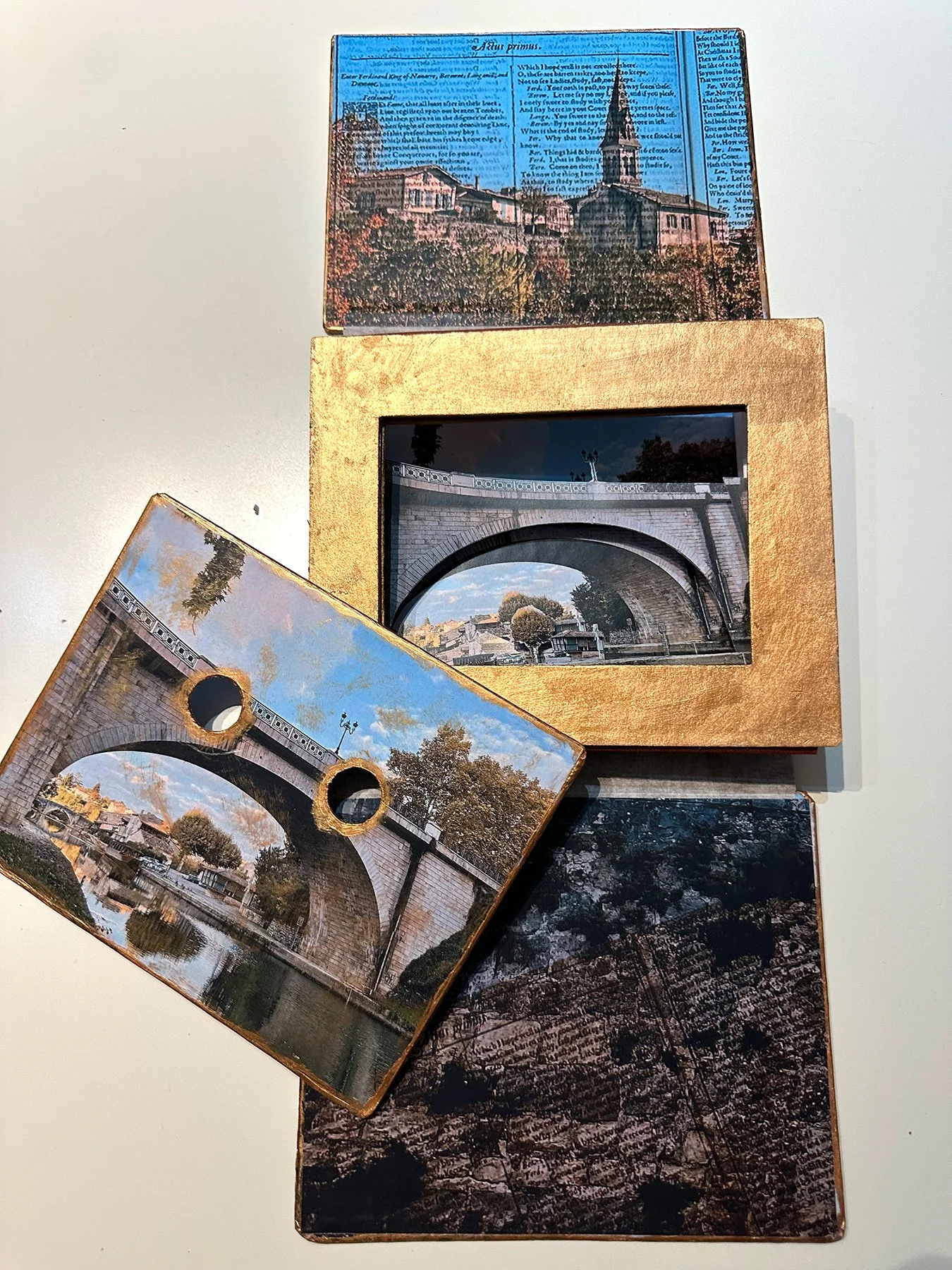
Each configuration of drawings, images, and video is unique to the notion of isolation: Ed Janzen manipulates a section of wood and tests its biological nature; Dennis Hunkler uses a human face within an inhuman frame; Collette Broeders features an experience of solitude through paper peepshows and stereoscopic views; Janzen+Broeders perform in locations throughout the city challenging ideas of isolation prevalent in urban spaces; Elaine Carr focuses on the process of walking which morphs into a daily drawing practice of solitude; Karl Jirgens takes individual pixels signifying isolation.
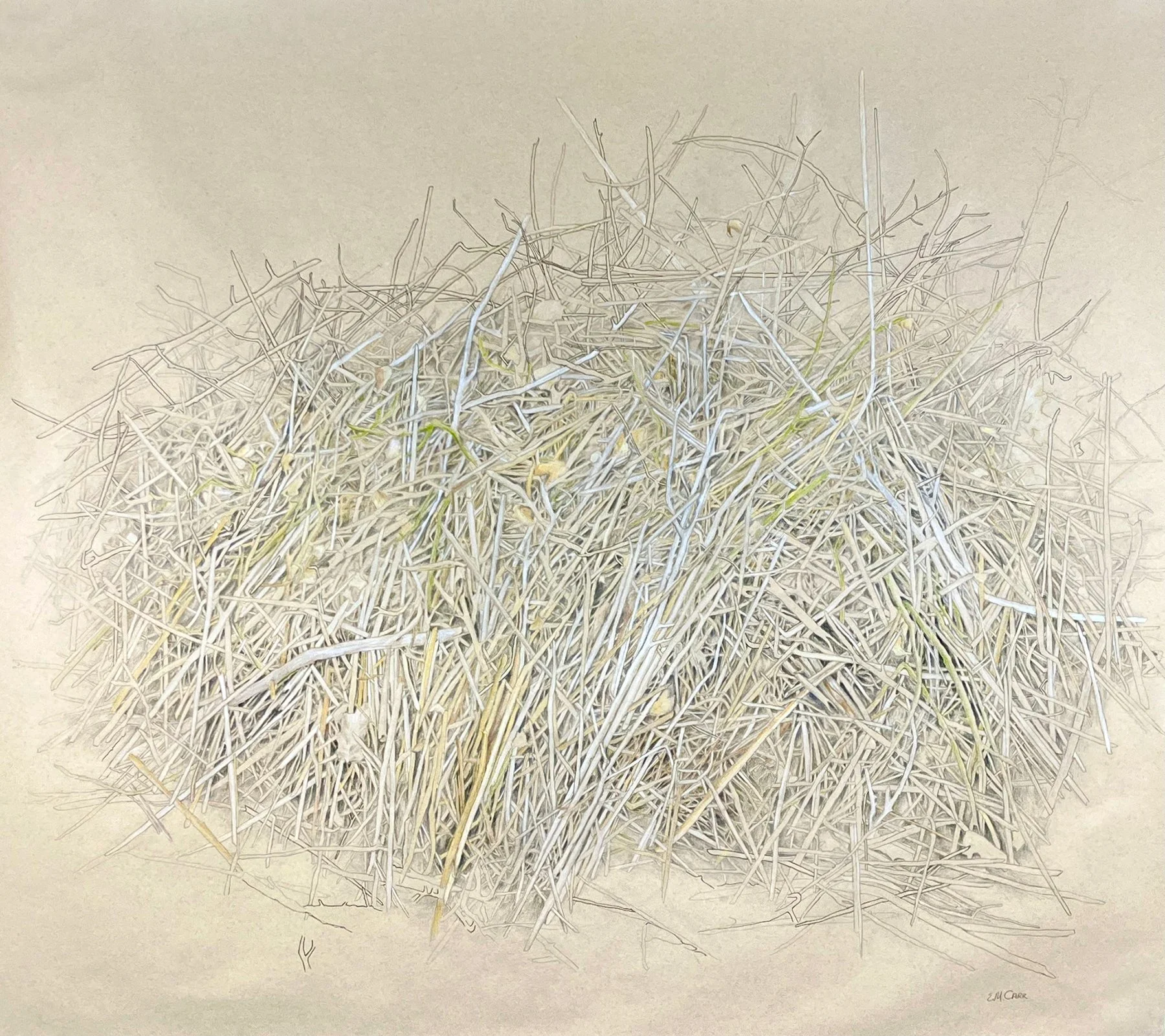

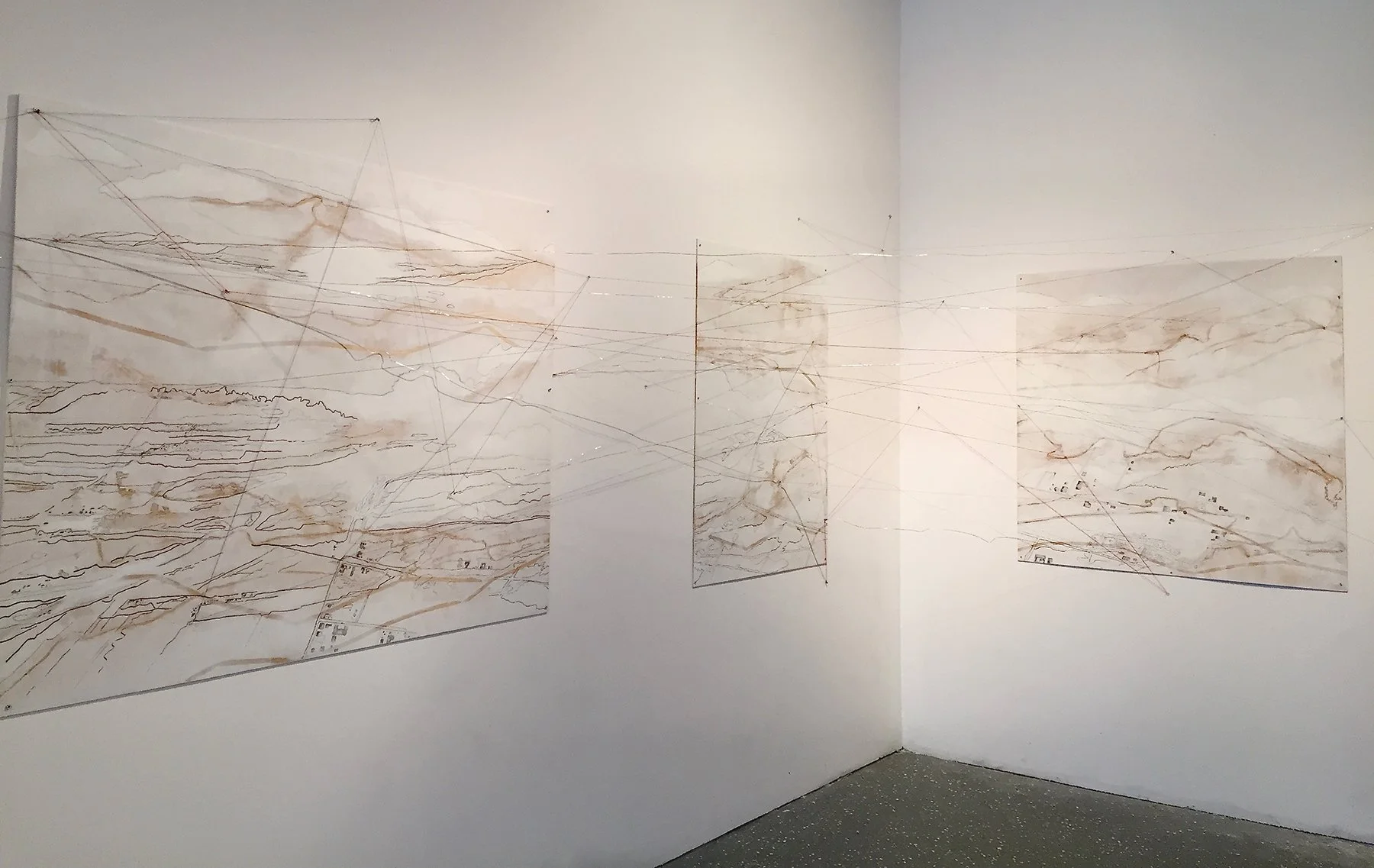

Elaine Carr's practice is rooted in her relationship with Place - both personal and communal. Walking on the land and along the water, narratives of place are given voice. Cartographic and topographic data enter into a dialogue with fragments of memory. As observer and participant in this relationship, her work is dynamic, offering multiple simultaneous perspectives. The process of walking morphs into a daily drawing practice through which she asks, "How are we connected to each other, the land, the water and other species? What are the implications?"
The drawings are the means by which she processes and illustrates what she is coming to understand. They become markers in the narrative of a relationship that is challenging and possibly altering our trajectory.
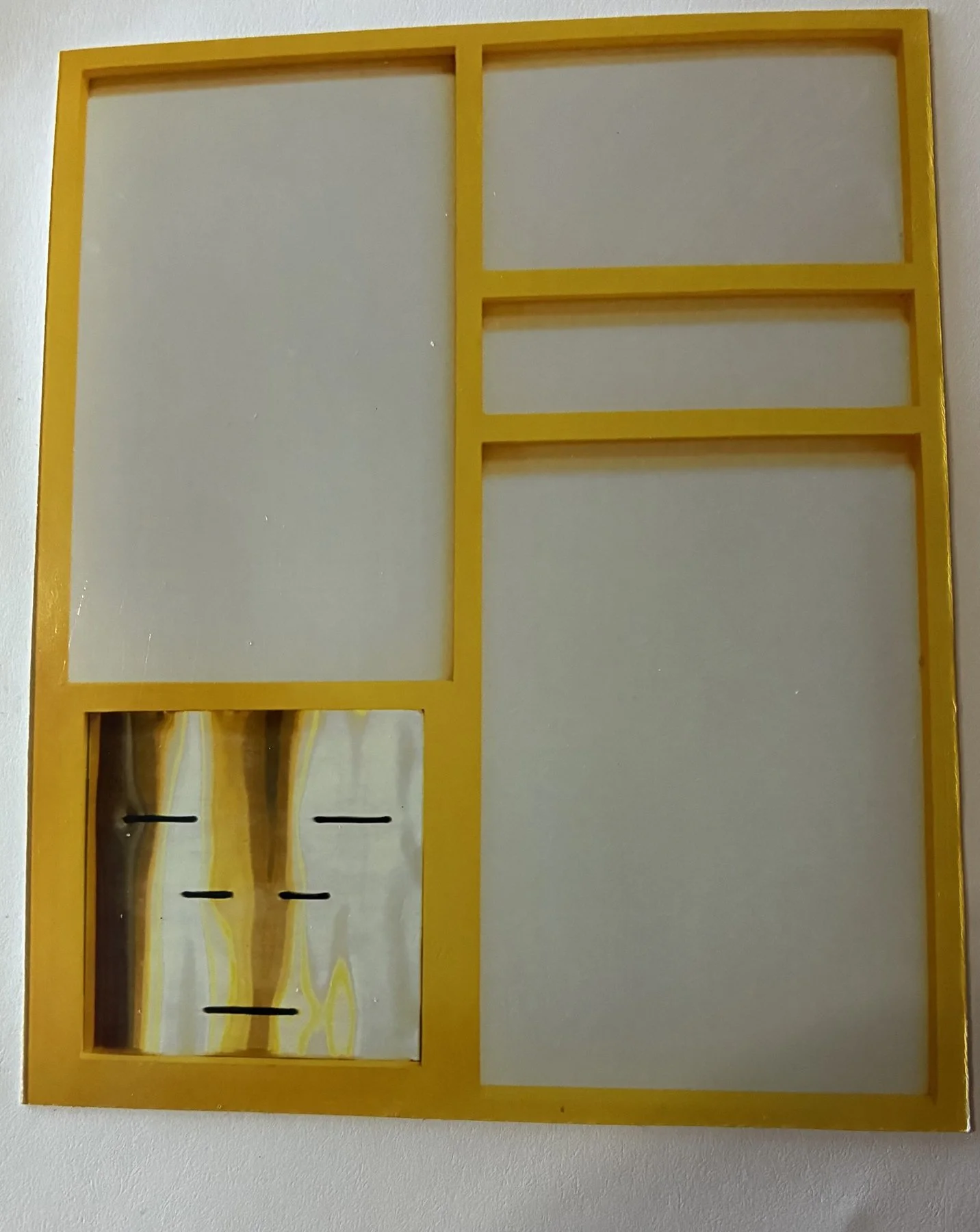
Dennis Hunkler — “These five sculptural reliefs sculptures have metal faces fitted into them, showing our ‘progress’ from the organic, which we hardly understand, to the artificial, which we think we know all about. When the wealthiest businesses on earth make, in effect, artificial brains, we need to challenge our priorities... as human causal generators.”
Ed Janzen and Collette Broeders (Janzen+Broeders) have been collaborating since 2020. Their work consists of public intervention, performative large-scale drawings and video installations expressed through mark making and rhythmic movement. Written text, surroundings of place, and tactile sensory experience influence the work. Their individual practices share an interest in the abstraction of text, drawing and walking.
Expression of movement, interactivity, and dialogue form an integral performative aspect to the work. To guide the work, a set of three rules are created by the artists each time they engage in performative drawing.
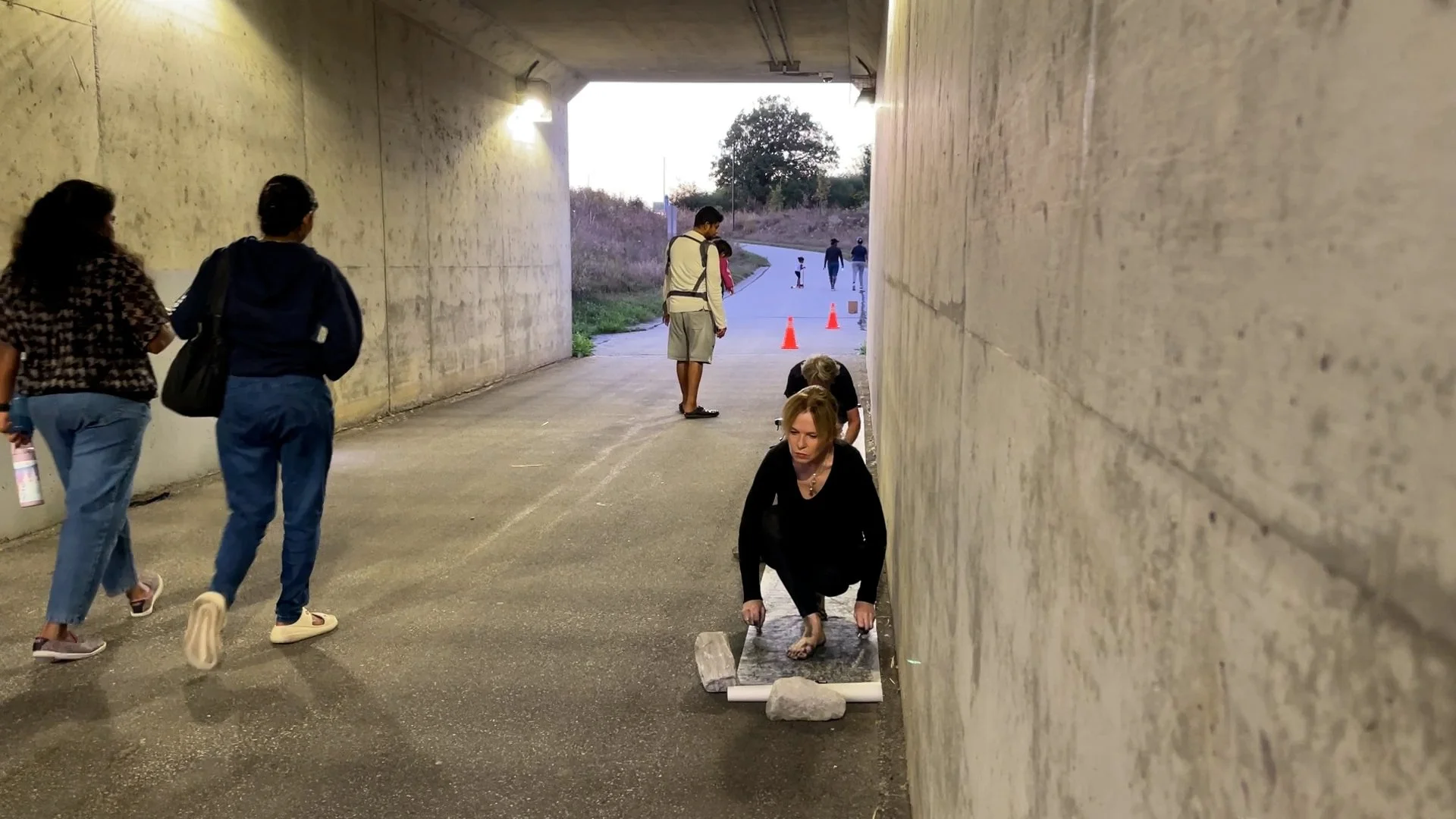
These performances often last hours in site-specific private or public areas, in quarries, in forests, in buses, in barns and along paths. The artists respond to the space using their bodies as instruments of absorption and inscription into the textures of the surface.
Fascinated with themes of language, the artists often enlist public participation using social environments to connect with a process of collection and reaction to form a dialogue. The artists create spontaneous interactions through performative drawing giving remnants to participants as an exchange and in some instances, leaving behind gifts. Through these interventions, the artists foster random connections and social interactions among strangers engaging them as participants in the creative process.
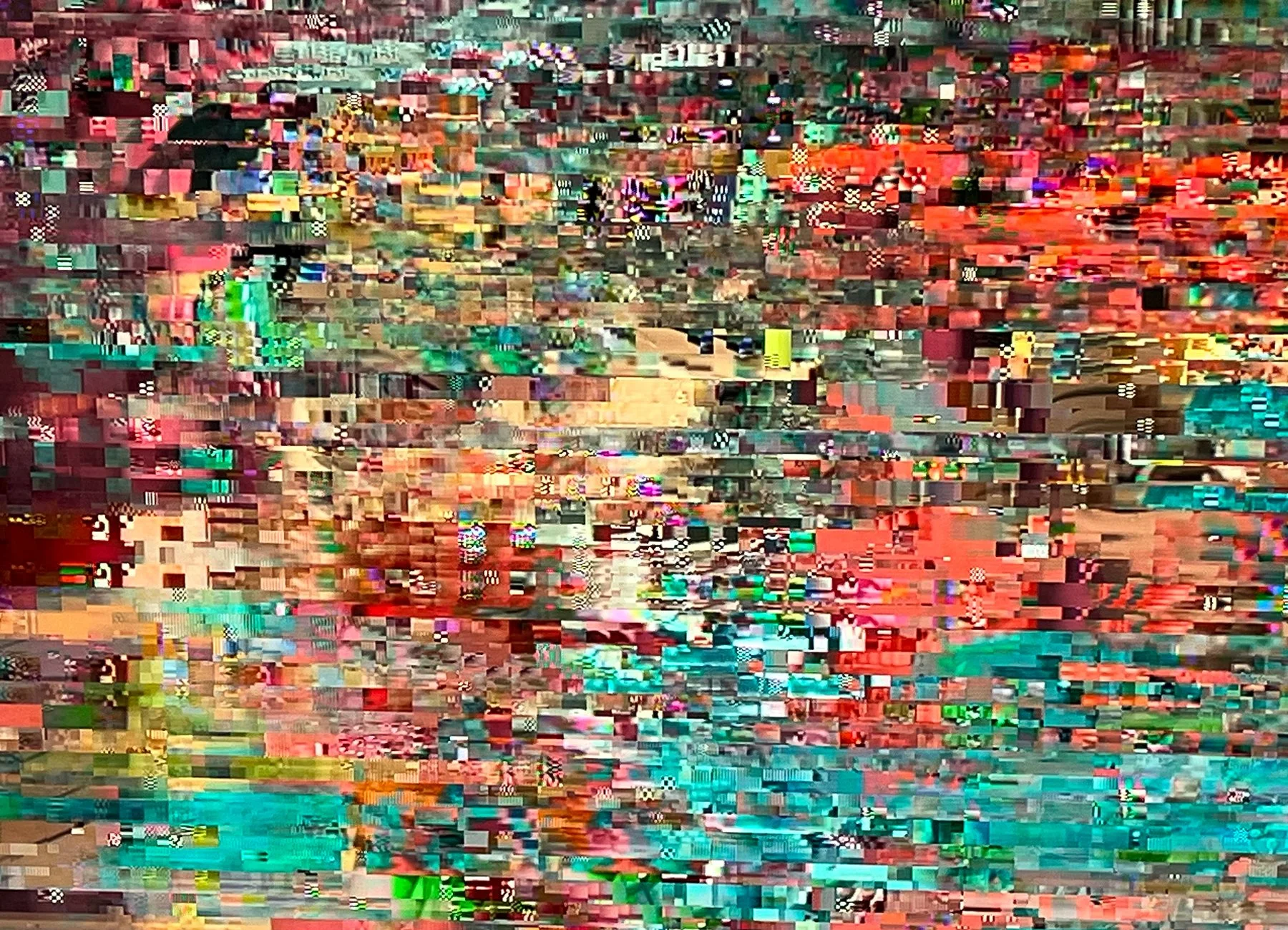
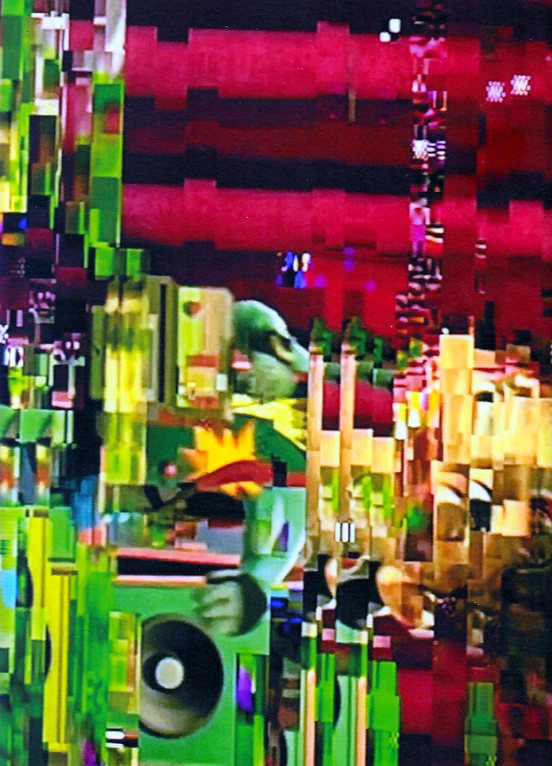
Karl Jirgens — “Pixels are preposterous, particular, perfunctory, prize-performers. They can construct or deconstruct. They can build images or fragment them. Pixels are automatically confined to single elements, and that makes them isolated.
For those who are unfamiliar with the term, a ‘pixel’ is a tiny area of illumination on a display screen, one of many from which an image is composed. The term “pixel” is short for "picture element," and it’s possible to say that visual pixels are akin to phonemes and morphemes in language because they are the smallest units possible. Pixels are tiny dots that represent a single point of color. When combined with other pixels, they form the images we see on screens, such as computer monitors, smartphones, and televisions.
These particular images result from a television that experienced a malfunctioning antenna. Splashes of colour and distorted images resulted. Millions of colored pixels may come together, and when viewed from a distance, seem to combine into a seamless image due to the functions of our brains and eyes. But with these particular images, only some parts are recognisable. These images are ruptured, fractured, disrupted, severed, and strange.
The term ‘pixelated’ is sometimes used to describe digital images in which individual pixels are discernable, as when you look closely at an enlarged photo and can see the tiny dots that make up the image. Perhaps one should know that the term ‘pixelate’ has been in use since the mid-19th century. But, ‘pixelated’ is also a term derived from mystical Pixies who are often cheerful but are sometimes mischievous sprites. The term ‘pixelated,’ is often used to describe things that are whimsical, or people who seem dazed or lost in thought. These photos were done during a time when my television was pixelated and while I was home alone with my camera. These images are ‘pixelated’ in both senses of that word because they adopt the mischievous attitudes of a Pixie, and they are deliberately ruptured.”
Collette Broeders is a passionate mixed media artist merging traditional processes with new media and performance. She has a combined education in business, accounting, and visual arts from St. Clair College of Applied Arts and Technology and the University of Windsor. She has exhibited nationally and internationally. Selected performance, solo, and group exhibitions include: Orange County Center for Contemporary Art (California); IndexG (Ontario); Whitdel Gallery (Michigan); Calvin College (Michigan); Thames Art Gallery (Ontario); Crane Museum of Papermaking (Massachusetts); Devos Center (Michigan); University of Michigan gallery; Work • Detroit (Michigan); Art Gallery of Windsor (Ontario); Niagara Artist Centre (Ontario); Amateras Foundation (Bulgaria); Artcite Inc. (Ontario); Studio Faire (France); and Woman Made Gallery (Illinois). Her most recent work includes performance and installation at Art Windsor-Essex (Ontario).
Elaine Carr Elaine Carr is an interdisciplinary artist born in Scotland, living and working in Windsor, Ontario. She creates perspectives of land, water, space and memory and considers the effects of human activity on the earth, with particular emphasis on water. Her mixed media works include drawing, photography, relief sculpture and installation, piecing together fragments from the present and the past, from historical and geographical data, cartography, photographic data and memory. Environmental and social justice have long been a focus in Elaine's work. She has presented papers and led workshops at the Arts for Social and Environmental Justice Symposium in Toronto, the Social Justice Conference at the University of Windsor, the Art Gallery of Windsor, and at the Nordic Association for Canadian Studies, University of Turku, Finland. She holds an MA in Culture and Spirituality, Holy Names University, Oakland, California; BFA, Visual Art, University of Windsor; BA Honours History; BEd, Western University.
Dennis Hunkler (New School of Art, Toronto, Canada 1965-69; San Francisco Art Institute, B.F.A. 1972). Exhibitions: Purging the Anomalies, Paintings and Drawings, Arts Council Windsor and Region, Windsor, Ontario, 2025; Stanzas: Concrete is Porous, Victoria Arts Council, Victoria, BC, 2020. Architecture and Poetry: Plan into Elevation, Arthur Secunda Museum at Cleary University, Howell, Michigan, 2019. Biographies: Who’s Who in American Art, 1976-present, R.R. Bowker Company, New York, NY; Dictionary of International Biography, Volume 16, International Biographical Centre, Cambridge, England. Collections: City of Toronto Archives, Toronto, Canada; Museu De Arte Contemporanea International, Salvador, Bahia, Brazil; Oakland Museum of California, Oakland, California; Museum of Contemporary Art, Roskilde, Denmark; Franklin Furnace Archives at the Museum of Modern Art, New York, NY.
Ed Janzen is a Windsor, ON based artist whose practice utilizes digital media, drawing, performance, installation, printmaking, fire sculpture, and sound. His Ambient Walks have taken place in Canada, US, Cuba, Portugal, Spain, and Mexico. Selected exhibitions include: Nuit Blanche Toronto, Art Windsor Essex, Thames Gallery (ON), PAVED (Saskatoon), Gallery Project (Ann Arbor), CAID (Detroit), Artcite Inc (Windsor), and Hamilton Artists Inc. His experimental videos have screened at six Media City Film Festivals (Windsor), Festival International Du Film Sur L'Art (Montreal), Sphere (India), Kassel Dokfest (Germany), Antimatter (BC), Onion City (Chicago), Australian Film Festival (Melbourne), and Basement Media Fest (Brooklyn/Boston). A collection of his videos are distributed by Canadian Film Makers Distribution Center. He was co-founder and participating artist for two fire sculpture artist collectives: Control Burn, Windsor, 2002-2011, and the IgniteArt Collective Sioux Lookout ON in 2017, as well as Scratch 'n Sniff, a writers and artists collective in Windsor, 1993-98. He is a musician, singer-songwriter who performs solo and with two roots-influenced bands, Dead Waits, and The Unscene. He holds a BFA in Visual Art and a Computer Science degree from the University of Windsor.
Janzen+Broeders (Ed Janzen and Collette Broeders) have been collaborating since 2020, producing performative drawings and video work in public and private spaces throughout various communities. Their ongoing project Dialogue, Parts 1 through 5 has been presented and performed at Common Ground Gallery in Windsor and Cedar Ridge Gallery in Toronto. Dialogue No.8, an installation and 7-part performance, was exhibited at Art Windsor Essex in 2024. Public interventions of Dialogue have occurred in Conservation Halton parks, along pathways, on Pelee Island in an abandoned quarry and barn, and inside tunnels and walkways throughout Windsor, Ontario.
Karl Jirgens, former English Deptartment Head and former Chair of the Creative Writing Program at the University of Windsor, is author of six books (Coach House, Mercury, ECW, The Porcupine’s Quill, and Exile Editions). Jirgens edited two books (on painter, Jack Bush, and poet, Christopher Dewdney) plus, an issue of Open Letter magazine with Beatriz Hausner. His scholarly and creative texts are published globally (recently in Japan). His poetry was selected for Best Poetry of Canada, 2023. His prize winning short-fiction collection, The Razor’s Edge was published in 2022. His latest book is Travesties (Exile, 2025, poetry). Jirgens founded, edited, and published Rampike magazine, featuring celebrated international artists, writers, and theorists, including: Jacques Derrida, Julia Kristeva, Paul Auster, William Burroughs, Clarice Lispector, Robert Lepage, Daphne Odjig, Norval Morrisseau, Ron Baird, Dennis Oppenheim, Ian Baxter&, Janet Cardiff, and Chris Burden, among others. Rampike is print archived at Thomas Fisher Library (University of Toronto) and digitally archived at Leddy Library (University of Windsor).
Images:
1. Elaine Carr, Dwelling 2, 2022, graphite, ink, colour pencil, conte on toned paper.
2. Ed Janzen, Untitled (a section of tree stretched the equivalent of one additional years growth), 2025.
3. Karl Jirgens, Pixelated, 2025, digital print.
4. Elaine Carr, Trace Narratives, 2019, mixed media on wood panel.
5. Dennis Hunkler, PUSHING THE LIMITS, Left (down), 2025, wood, aluminum, plastic.
6. Collette Broeders, Paper Peepshow No. 2, 2024, laser photographs, acrylic on paper, board, cloth.
7. Karl Jirgens, Pixelated (detail), 2025, digital print.
8. Janzen+Broeders, Dialogue No. 9, September 28, 2025, performative intervention in a pedestrian tunnel, LaSalle, ON.